To Be Witnessed Is to Be Loved
A Review of Beyond Grief, a memoir by Dr. Egli Colón Stephens
I first met Dr. Egli Colón Stephens in August 2015, when I walked into her Introduction to Sociology class at Bronx Community College. I had been in the United States for about nine months, and starting college in a new country felt like another beginning I had to make the most of. As a Type A student, I sat close to the front of the classroom. I wanted to learn, of course, but thinking about it eleven years later, I suspect I also wanted to be seen. I had relocated from Nigeria, excited about education and the possibilities I imagined it would create for me. So, hiding quietly at the back of a classroom felt like a waste of that privilege.
What I remember most about Ms. Egli’s class is not necessarily sociology. I remember how human she was with us. She taught with compassion and with an understanding that her responsibility extended beyond helping us complete a course and earn a grade. She was preparing us for whatever came after her classroom. She occasionally shared stories about her own life, listened to ours, and treated us as people whose lives were unfolding beyond the desks where we sat. I did not know on that first day that I was meeting someone who would eventually become one of the witnesses of my life.
Two years later, when I returned to Bronx Community College for a workshop on my writing and books, there she was, sitting in the front row. Over the years, she has been present for many significant moments in my life. If I were ever absent from the telling of my own story and someone needed to explain who I had been, what I cared about, what I worked toward, and the person I was becoming, she is one of the people whose voice I would trust. There is something profound about having people in our lives who have watched enough versions of us to tell our stories accurately. Perhaps that is one definition of love: to pay enough attention to another person’s life and bear witness to it.
I met Ms. Egli’s daughter, Natalia, a few years later when I worked with them on Unbroken, their first book together. The memoir documented Natalia’s experience of being diagnosed with cancer at twelve and surviving it. Natalia was a co-author, and throughout the process of editing, revising, and preparing the book for publication, I had opportunities to speak with her and gradually get to know her. Unbroken was published in 2019, around the same period that we learned Natalia’s cancer had returned. Still, we hoped and prayed for another miracle. She underwent surgery, and we celebrated the book while holding onto the possibility that this would become another chapter in a story about survival.
Then came 2020.
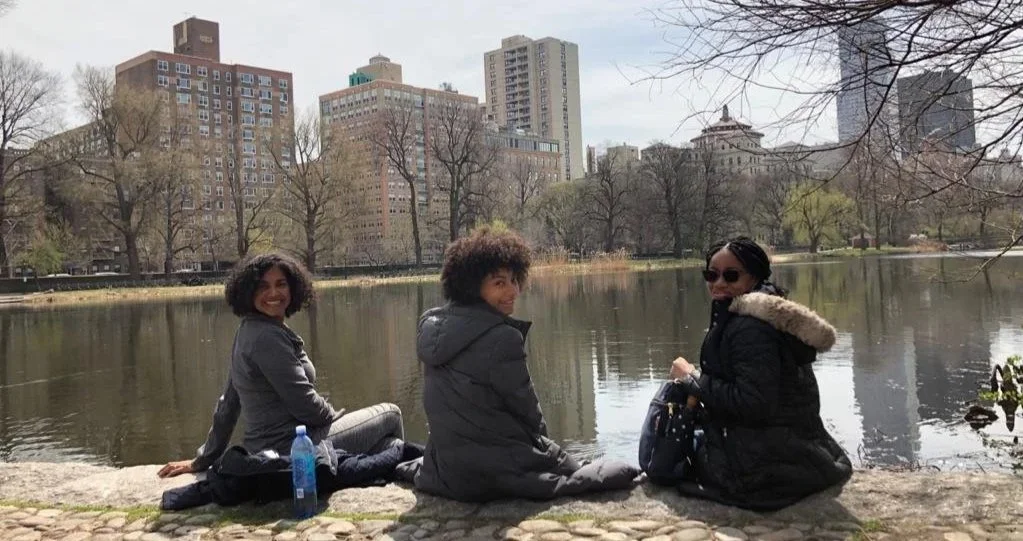
I have written several times about the pandemic being one of the most transformative periods of my life, although I have rarely written explicitly about the most significant experiences that made it so. Before then, death had never entered my life in such close proximity. I had understood it as something inevitable, something that happened in families and communities, but there is a difference between understanding death intellectually and watching it enter the life of someone connected to you. One of my last memories with Natalia is from the spring of 2020. The three of us were near Central Park, sitting by a small pond and feeding ducks. Later that year, Natalia died. She was only twenty-four years old.
Natalia had lived a life that, from the outside, could easily be reduced to impressive things. She was a professional model whose work appeared across major fashion platforms and publications; Project Runway, Vogue, Elle, and Delta Air Lines, to mention a few. Thousands of people followed her for fashion, beauty, and the exciting life associated with those industries. Yet, in the months and years I had the privilege of getting to know her, what struck me was how remarkably down-to-earth she was. She was all those impressive things, but she was also simply a mother’s daughter. She loved God deeply. She cared about causes larger than herself. She dreamed with an almost audacious specificity, setting goals, talking about them, writing them down, placing images of the life she imagined around herself, and then working until some of those dreams became real.
There is something particularly unsettling about the death of a young person because youth creates an illusion of abundance. At that age, the future appears to contain an almost irresponsible amount of time. Natalia and I were around the same age, and I processed her death partly through that proximity. Her death forced me to confront the responsibility we have to live honorably.
There is a line from Senator John N. Kennedy that occasionally circulates online because of its almost brutal humor: “There are only two things I have to do in this world: be cool, and die.” I think of it here because, in the simplest sense, Natalia was cool. She had already, at twenty-four, experienced a version of success and a way of life many people spend their lifetimes pursuing. To have the world seemingly at your fingertips so young and still move through it with humility is something I admired about her.
I remember thinking after her death about everything she might have done with more time. I still think about it. Had she been given more years, I believe she would have continued making something remarkable of them. Even now, I can only aspire to have the kind of hope about life and the future that seemed to come so naturally to her.
When I think about Natalia’s death now, I increasingly think about it through her mother’s eyes. Losing someone you love is devastating; losing your only child, the person around whom so much of your purpose, resources, imagination, and future have been organized, rearranges the architecture of a life. In the months following Natalia’s death, Ms. Egli and I sometimes walked through Central Park. Other times, we talked on the phone simply to check on one another. Despite our age difference, our relationship had developed into a friendship in which there was little need to perform strength for each other. There was no shame that could not be stripped away from a conversation if honesty required it.
Several times, Ms. Egli told me plainly that she no longer had the will to live. There is a particular helplessness in hearing someone you love say this when you know exactly why they mean it. There was no sufficiently profound sentence, Bible verse, distraction, or act of friendship that could reconstruct the future she had imagined with her daughter in it. Grief taught me that presence and rescue are not the same thing. You can sit with someone. You can listen. You can call. You can walk beside them and encourage them to continue participating in a world that suddenly feels incompatible with their existence. You can love them fiercely. But you cannot save someone from grief by loving them enough.
So, we walked. We talked. Sometimes, we sat quietly. We watched the birds in Central Park, especially the red cardinals and blue jays. Ms. Egli taught me what cardinals symbolize for many grieving people, and I have never looked at birds quite the same way since. This is another strange thing about grief: it gives ordinary things new assignments. A bird is no longer merely a bird. A photograph becomes evidence. A number becomes a border separating heaven and earth. In Ms. Egli's case, Natalia showed up in random feathers, the number 11, and red cardinals.
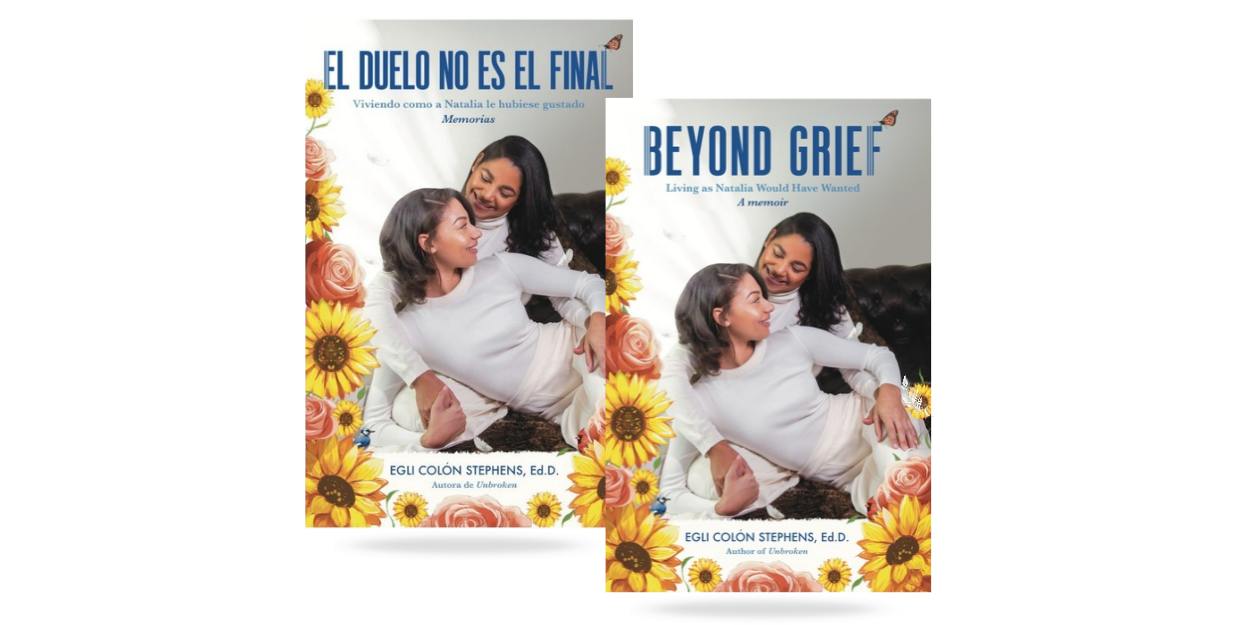
Six years after Natalia’s death, Ms. Egli has written Beyond Grief, a book I wish she had never needed to write.
There is an almost unbearable symmetry between Unbroken and Beyond Grief. Imagine writing a book about your twelve-year-old daughter surviving cancer, filling its pages with testimony about faith, endurance, and the possibility of recovery, only to eventually write another book about the cancer returning and taking her life. The first book captures the fight to keep Natalia alive. The second confronts what it means for her mother to remain alive after her only child dies. Having worked on Unbroken and knowing much of the story told in Beyond Grief personally did not make reading the book easier. In some ways, familiarity made it more difficult because I knew the people behind the sentences.
Beyond Grief documents Natalia’s final years, from 2016 until her death in 2020, including a mother’s experience of holding her daughter in her arms as she passed away. But the book does not end where Natalia’s life does. Ms. Egli also writes about the years afterward: the days when getting out of bed felt impossible, the moments when she did not want to speak to God, and the gradual reconstruction of a life she had not planned to live. She writes about eventually leaving a twenty-year career in higher education, discovering baking despite having no history of imagining herself as a baker, skating in the park, traveling, writing, and slowly allowing herself to encounter life again.
I hesitate to call this a story of “moving on” because I do not think that is what Beyond Grief asks of us. Ms. Egli’s life does not become more meaningful because she learns how to live without Natalia, nor does she construct a new life despite her daughter. She begins learning how to live in her honor. There is a difference. Grief remains present, but it ceases to be the only evidence that love existed.
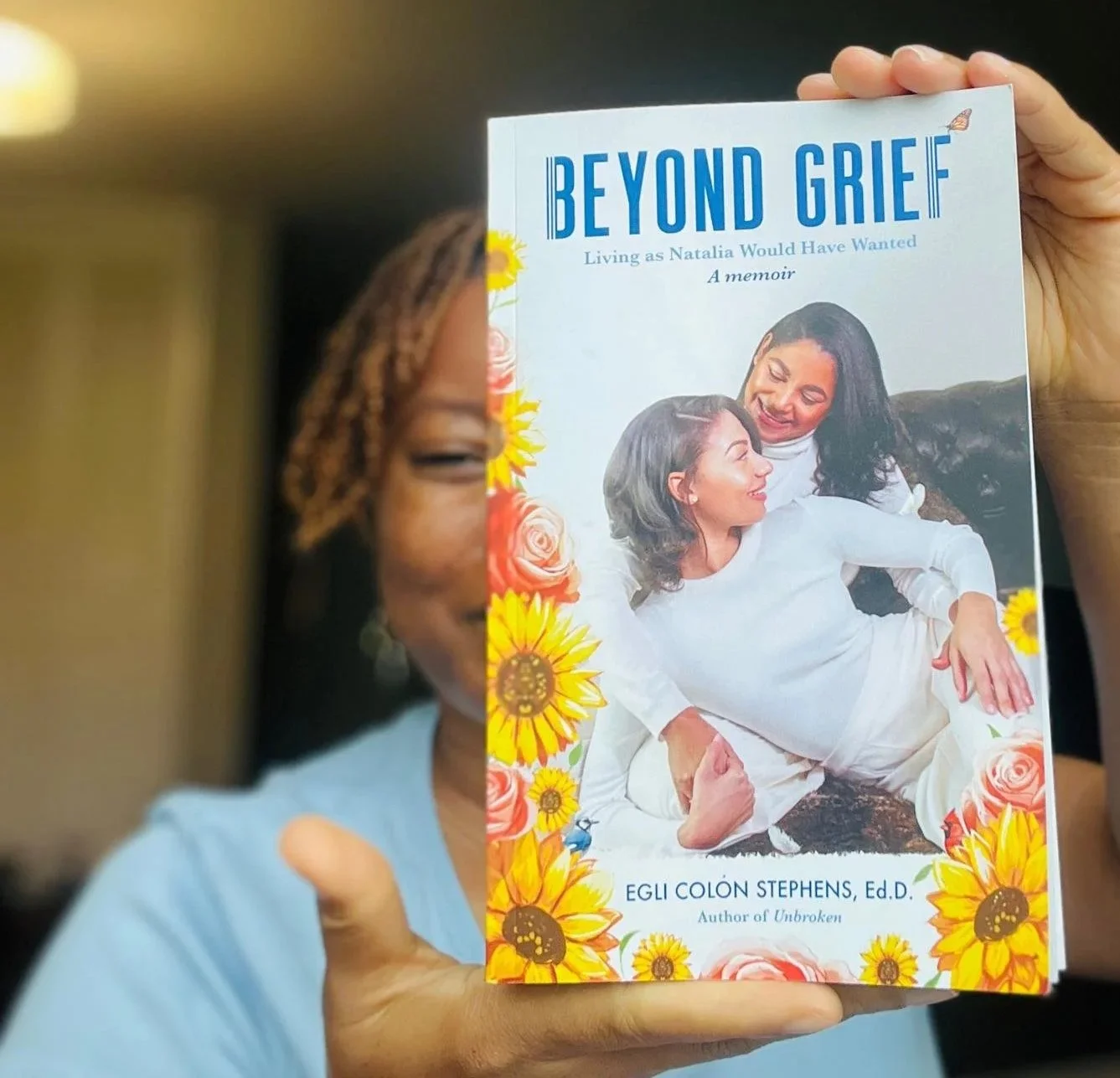
This is why I find Beyond Grief remarkably tender and vulnerable. It is also, for lack of a better word, shameless. The book does not sanitize grief into something inspirational enough to make other people comfortable. Ms. Egli writes about what happens when the person into whom you have poured your love, prayers, resources, plans, whole life, and hope dies anyway. She writes about anger, despair, loneliness, and reconciling with God after praying for an outcome that did not arrive. Faith is not presented as immunity from devastation. Sometimes faith is what remains after every explanation you once found sufficient no longer satisfies you. The book does not eulogize death or force suffering into a dramatic lesson about how tragedy secretly improves us. Instead, it seems to say: here is my shattering; here are the pieces; here is what attempting to glue them together has looked like.
There is bravery in that kind of testimony, but there is also love. Beyond Grief has left me thinking that to be witnessed is to be loved. It is to carry stories the person can no longer tell for themselves and to resist allowing death to flatten an entire human life into the fact that it ended.
In an unexpected way, Beyond Grief also becomes Ms. Egli’s act of witnessing herself. The woman who once told me she had no will to live has now written a book about what it has required to remain alive. I think one of the most honorable things we can do after losing someone we love is to live well—not because living well proves that we have healed, but because our continued life can become another expression of the love we still carry.
Beyond Grief is ultimately a book about that miracle. Not the miracle of escaping death, avoiding suffering, receiving every answer to prayer, or recovering the life we once had. It is about the quieter, and perhaps more difficult miracle of discovering that there can still be life after the future we wanted is no longer available to us. It is about waking up after shattering, finding the pieces where they landed, and slowly discovering that although they may never fit together exactly the same way, it's still a worthy life.
I met Ms. Egli because at nineteen, I sat at the front of a sociology classroom wanting to be seen. I could not have imagined that eleven years later, I would be writing about what it has meant for us to witness each other’s lives through books, careers, faith, accomplishments, death, grief, and beginnings we never anticipated. I certainly could not have imagined Natalia, Unbroken, Central Park, the cardinals, or Beyond Grief. But perhaps this is what a life was meant to be and what God intended from the beginning: people who are here long enough to witness each other with love; and with memory when witnessing is no longer an option.
Natalia was here. Her mother witnessed her. And now, through Beyond Grief, she invites us to know the story too.